Wednesday, May 30, 2018

Intro to Magic part 2: What happens in a game of Magic?

In last Wednesday’s post I explained what Magic: the Gathering is and a little about how the different card types work. Today, in part 2 of my Intro to Magic series, I'll go over the structure of a Magic game and some keywords you should keep an eye out for.

How to play

Most games of Magic are played by two people, though some formats require more, and some don't require more people but are more fun when played in a group of three or four. Almost all of what I am about to say is the same in all formats, with just a couple of things that change in larger groups.

The game begins with all players shuffling their decks. After you shuffle, it's polite to offer your deck to an opponent to cut, as a sign that you're playing fair. Players determine who goes first, usually by rolling dice, and then each draw an opening hand of seven cards. In a two-player game, the winner of the die roll chooses whether to play first and not draw a card on their first turn, or play second and get the extra card. In multiplayer games, everyone draws a card on their first turn.

The part of the play area (commonly called the battlefield) controlled by any one player looks like this:

  • The Library is your deck.
  • The Graveyard is where creatures go when they die, enchantments and artifacts when they're destroyed, instants and sorceries after their effects resolve or are prevented from resolving, and planeswalkers when they get tired of helping you and leave.
  • Exile is where cards go when they're removed from the game. It's much easier to get cards back from the graveyard than from exile.
  • Lands should go closer to you, and spells closer to your opponent. This is considered best practice because it makes it easier for your opponent to see what your cards do.
A turn has the following phases, though you can't do all of them on every turn.
  • Untap: If it's not your first turn, you untap all cards you control that are tapped. (Remember, tapping a card means turning it sideways to show that you are using an ability it has that requires it to be tapped.)
  • Upkeep: Some cards, but not many, require you to do something during this phase. They will say so.
  • Draw: You draw a card.
  • First main phase: You may play a land and/or cast any spell that you have mana available to cast.
  • Combat: You may have creatures you control attack an opponent or a planeswalker they control. 
    • When a creature attacks, it becomes tapped unless they have an ability that says otherwise. 
    • Creatures you cast this turn, unless they have an ability that says otherwise, have summoning sickness, which means they're a little nauseous from having just been pulled out of the aether and have to wait until next turn to attack, or to do anything else that requires you to tap them.
    • Once you have declared which creatures you're attacking with, your opponent has a chance to block with creatures they control. Before and after this step, both of you have opportunities to cast Instant spells to affect the outcome of combat. You could, for example, cast Charge to make all your creatures temporarily stronger, or cast Moment of Craving to make one of your opponent's creatures weaker.
    • Each creature then does damage equal to its power. If it was blocked, that damage is subtracted from the blocking creature's toughness; if it wasn't blocked, it's subtracted from the blocking player's life total. Creatures whose toughness is now zero or less go to the graveyard; creatures who survive will be restored to full toughness at the end of the turn.
  • Second main phase: You can do any of the things you could do in the first main phase. If you played a land then, you cannot play another one now, unless you have cast a spell that says otherwise.
  • End: Some cards, but not many, require you to do something "at the end of your turn." This is when you do those things.
In part 1 I mentioned that Instants are different from Sorceries in that Instants can be played at more points in the game. This will make sense now. Instants can be played at any time, even during your opponent's turn, and in response to their spells. Sorceries, like all other card types, can only be played during your main phases.

After your turn ends, your opponent's begins with their Untap phase. In larger games, play passes to the left. The game ends when only one player has a life total greater than 0. There are also cards that grant alternate win conditions; there's a list of those on the wiki if you're interested. Be aware that it includes some mechanics that aren't used anymore and might not make sense.

Common keywords

Magic has a lot of card abilities that are described using keywords. Not all of these keywords will make sense at first glance; here are some that show up fairly often and are good to know. Most of them either appear on creatures or can be given to creatures using other cards that grant them.
  • Trample: If this creature is blocked, it deals any leftover damage to the blocking player.
  • Haste: This creature does not get summoning sickness. It can tap and/or attack the turn you cast it.
  • Vigilance: This creature does not tap when it attacks.
  • Flying: This creature flies. It can only be blocked by creatures with Flying or Reach.
  • Reach: This creature can block creatures with Flying.
  • Flash: This spell (doesn't have to be a creature) can be cast at any time you can play an Instant.
  • Menace: This creature is scary. It cannot be blocked by one creature on its own, only by two or more creatures.
  • First Strike: This creature deals damage before all the others. You can use this to kill an opponent's creature in a combat situation where both would otherwise die.
  • Double Strike: This creature deals both first strike damage and normal damage, effectively doubling its power.
  • Hexproof: This spell (again, not just creatures) cannot be the target of spells your opponent casts that requires them to choose a target.
  • Lifelink: When this creature deals any amount of damage to anything, its controller gains that much life.
  • Counter: This one only appears on Instants and some spells with Flash. Cast this spell in response to another spell to cause that spell to go straight to its caster's graveyard without its effects happening.
    • There is another meaning of "counter" in Magic; it also refers to putting something on a card to mark a change that's been made to it. The most common type of counter in this sense is +1/+1 counters, which add one to a creature's power and one to its toughness. A planeswalker's loyalty is also represented using counters. It's common to use dice in place of large numbers of counters.
  • Permanent: This isn't an ability; instead, it's a grouping of card types. "Permanent" describes all the card types that stay on the battlefield after you cast them: creatures, enchantments, artifacts, and planeswalkers. Instants and sorceries are not permanents.
Thanks for sticking with me this far! I know it's a lot to take in. Next time I'll describe the different Magic play formats and some ways to get started playing.

Monday, May 28, 2018

On Vacation

I’m traveling today and didn’t have time to make an image I needed for Intro to Magic part 2. That will go up on Wednesday. In the meantime, I hope you all have a peaceful and mindful Memorial Day.

Friday, May 25, 2018

On the Needles 17

Knitting

The last Twitter MKAL clue will be announced today, and I am gradually catching up.

The interactions between the colors remind me of Thin Mints and Speculoos.

Writing

Fantasy Twists, a short story collection that includes my story "Welcome to Connection," is now on sale. Check out this post for links to buy it on Amazon, Google, Nook, and Kobo, and this one for an interview I did about my story.

Drawing

Today is Pokemon day 544. Today's Pokemon is Whirlipede.

Wednesday, May 23, 2018

Intro to Magic part 1: What is Magic: the Gathering?

It occurs to me that not all of the people who read my blog regularly know how to play Magic. And I talk about it a lot, because it's a thing I enjoy and do a lot of. Here's a brief introduction to what the game is and how it works, so that you are not confused by my continuing to talk about this complicated thing that I enjoy.

Note to experienced Magic players: This is a general overview, so I will not be discussing set-specific mechanics. Please do not leave comments asking "but what about...". Please do leave comments elaborating on things you think I've missed, but bear in mind that this is a series and I will probably get to your point eventually.

The Lore

As a player of Magic, you play the role of a kind of powerful wizard known as a planeswalker (hence the name of my regular playgroup, the Lady Planeswalkers Society). A game of Magic is two planeswalkers fighting a magical duel, summoning creatures from various planes of existence to attack each other with, and casting spells to do further damage and/or change the environment the game is played in. Most Magic games start with each player at twenty points of life and the goal of reducing their opponent's life total to zero.

The cards

Here are the types of cards that normally show up in a Magic deck. Any generalization I make from here on out comes with the caveat "unless someone has played a specific card that says otherwise."
  • Lands produce the mana you need to cast spells, and make up between two-fifths and one-third of a deck, depending on the size of the deck and what strategy you're using. You can play one land on each of your turns, and each land card taps for one mana. To show that a card is tapped, you turn it sideways.
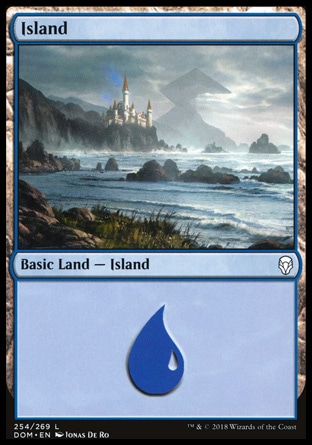
    • There are five types of basic land, each of which produces a different color of mana. Each color is associated with different kinds of spells and creature abilities, and plays a different role in the underlying philosophy of the stories that accompany the game (more on that in a later post).
      • Plains produce white mana,
      • Islands produce blue,
      • Swamps produce black,
      • Mountains produce red,
      • Forests produce green.
Island
All card images in this post are from magiccards.info.
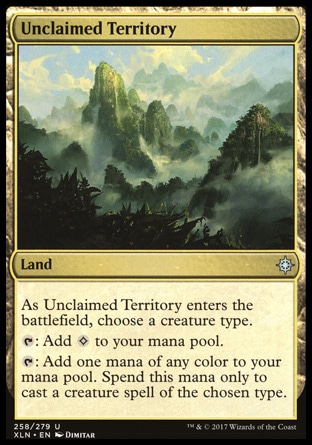
    • Nonbasic lands are any other kind of land. Some of these produce multiple colors of mana, or colorless mana (represented by a number or a diamond symbol). Some have abilities in addition to or instead of mana production.
Unclaimed Territory
    • All spells (that is, any card that isn't a land) have a casting cost, shown in the upper right corner of the card, that tells you how much mana of what colors is needed to cast that spell. This can include any of the five colors, any number of generic mana (you can use any color), and in some rare cases, mana that must be colorless.
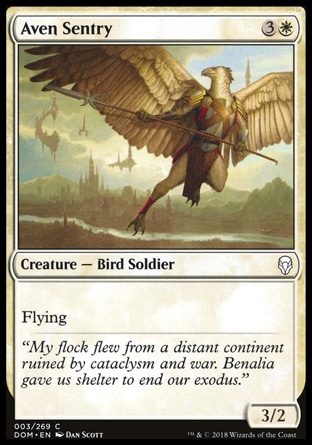
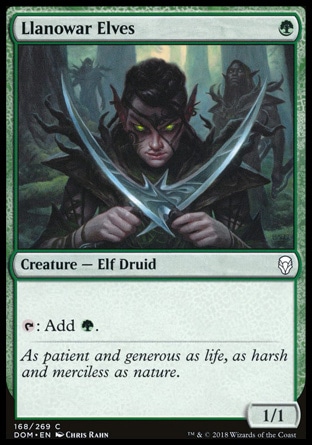
  • Creatures usually make up another third-plus of  a deck. These are people, animals, plants, and sometimes magic-powered robots from the planes you have access to as a planeswalker.
Aven Sentry Llanowar Elves
    • Each creature has one or more types (such as Bird, Soldier, Elf, and Druid), and a power and toughness that show how it attacks and blocks other attacking creatures. Aven Sentry has three power and two toughness; Llanowar Elves has one power and one toughness.
    • Most creatures also have abilities. For example, Aven Sentry can fly, making it harder to prevent from attacking successfully, and Llanowar Elves can be tapped (the curved arrow symbol means "turn it sideways") to create one green mana.
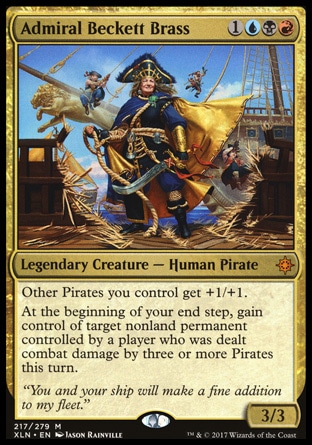
    • Legendary is a card type that is most often associated with creatures, but can appear on other kinds of card. If a card is legendary, you can only have one of it in play at a time. Legendary creatures often represent named characters in the stories associated with Magic sets.
Admiral Beckett Brass
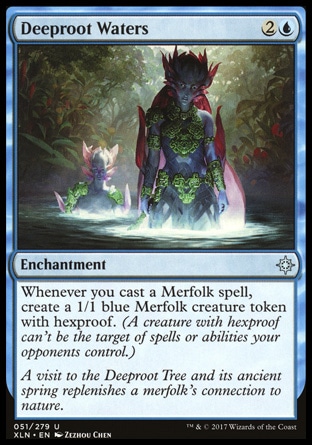
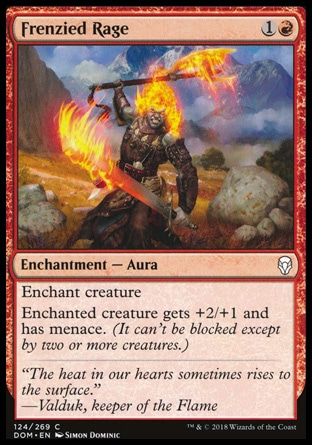
  • Enchantments are spells that stick around after you cast them and have a lasting effect. They come in a number of subtypes, including Auras, which are cast enchanting a specific other card.
Deeproot Waters Frenzied Rage
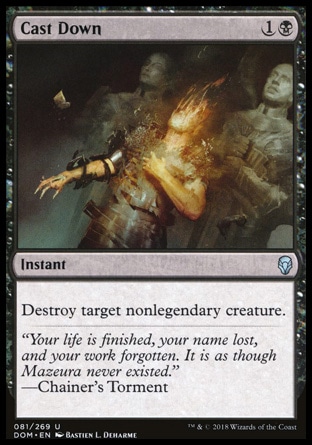
  • Instants and Sorceries are spells that have an effect for a short time and go away after you cast them. Instants can be cast at more different times during a turn than Sorceries; I'll explain that when I describe the structure of a game.
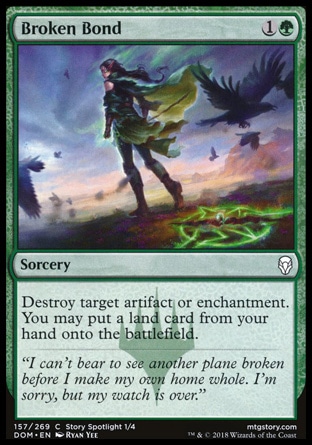
Cast Down Broken Bond
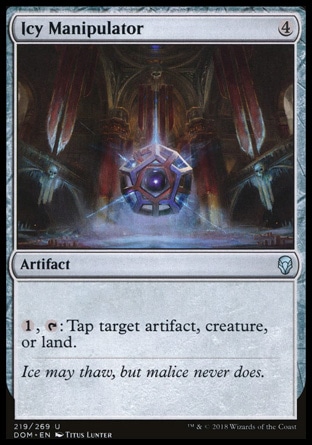
  • Artifacts represent magical objects or machines. They stick around and are almost always colorless. There are a variety of types; some act like enchantments, some (called Equipment) act like Auras, and some are creatures in their own right.
Icy Manipulator
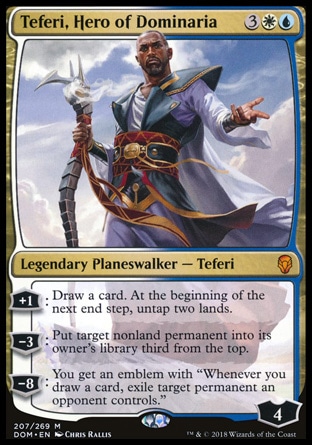
  • Planeswalkers are a rare card type that represent you calling on another wizard for help. They have loyalty, represented by the number on the bottom right, and abilities that require you to add or subtract loyalty from them. If they run out of loyalty, they get tired of helping you and leave. Planeswalker cards often represent the main characters of the stories associated with Magic sets, and they are always Legendary.
Teferi, Hero of Dominaria

That's probably enough to think about for now. Next time I'll go over the structure of a game of Magic.

Monday, May 21, 2018

On the Net 3: Teaching with Mastodon

Students are never going to stop using their phones in class. Any attempt by professors to ban technology will backfire, and cause them to hate you and not learn anything. It'll be much better for class morale, participation, and retention of course material to give them a way to engage with the class using their technology.

I had an idea a while back for Livetweeted Lectures: students tweet the course material and their responses to it, with a predetermined hashtag so the professor can collect the tweets and grade them for participation points. But given that I've gotten a bit sour on Twitter lately, and given that even tweets with very carefully chosen hashtags can get lost in the ocean of information that is the birdosphere, I propose that courses implementing Livetweeted Lectures use Mastodon instead.

A department can create its own purpose-built Mastodon instance. Something like, to use a nearby example, uw.linguistics.space. Professors make accounts with names that clearly identify them as professors, such as ProfKatz@uw.linguistics.space, and students are expected to use either their name or their student ID as their handle (AlexKatz@ etc or amk19@ etc).

Each session of a class has its own hashtag (like #ling101week1), which students use to livetoot the class. Professors grade students' posts for participation points as they see fit, and have moderator privileges both to remove posts that share test answers and punish their authors according to the department's plagiarism policy. Students can assemble study guides from the hashtag search results, or the professor can compile an official study guide based on what students actually learned, not just what they were supposed to learn.

Livetweeting has become an important part of academic discourse, so much so that following a conference hashtag is often the best way to keep up with what's happening at a conference, even if you're physically there. It's an important skill for university students to develop, and using Mastodon will give them a practice space that's safer than Twitter and will help them pay attention in class.

Friday, May 18, 2018

On the Needles 16

Knitting

The Twitter MKAL continues! I'm just finishing up clue 4 (out of 9); clue 5 has been announced, but I'm trying not to work on it too fast so I can rest my wrists.

Writing

Don't forget to check out this interview I did with Rayven Whitaker from Cuil Press! Cuil's new short story collection, Fantasy Twists, is out for preorder now (links here) and includes a story I wrote called "Welcome to Connection."

Drawing

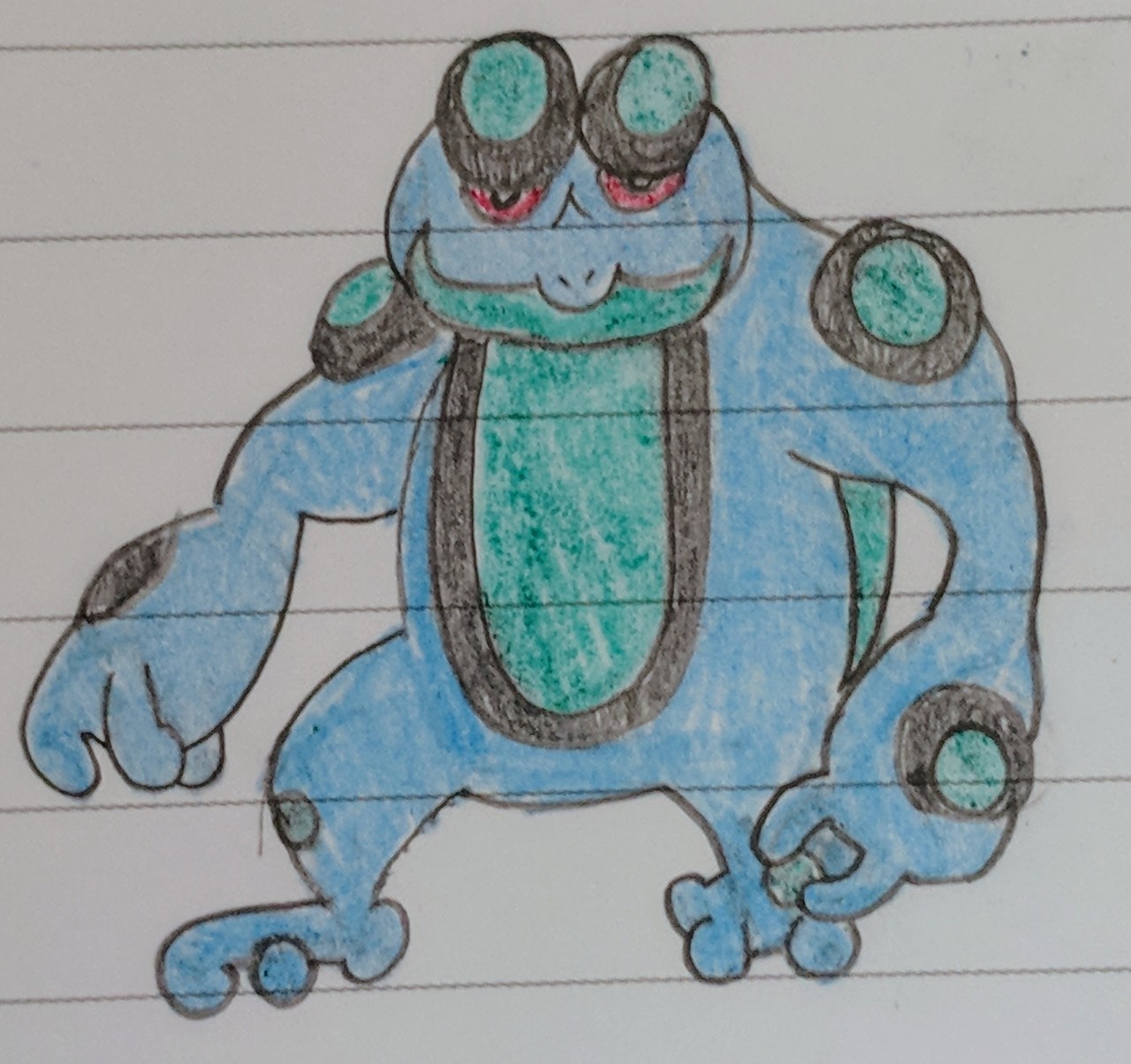
Today is Pokemon day 537. Today's Pokemon is Seismitoad.

Pokemon Art Challenge #537: Seismitoad, a Vibration Pokemon

Deckbuilding

This week's Lady Planeswalkers event was Dominaria draft. I built a mono-black Historic deck with three Cabal Paladins and a bunch of artifacts, plus a Torgaar and an Urgoros I saw about once each. I won one round out of three.

Thursday, May 17, 2018

On Writing 3: Fantasy Twists Interview

This week, I was interviewed by Cuil Press' Rayven Whitaker for a stop on the the Fantasy Twists publicity blog tour. We talked about "Welcome to Connection," the story I wrote for the book. Here's how that went:

Which trope did you decide to twist?
The trope I'm playing with is the Little Shop that Wasn't There Yesterday--a magical shop that shows up just long enough to kick off the plot and then vanishes. Occasionally the protagonists manage to get stuck inside, or hitch a ride on one from one place to another; Terry Pratchett did this in The Light Fantastic. My story is a look into the inner workings of such a shop, and how it finds its employees.

Do you have a process that you follow when creating a plot for your stories?
I like to say I listen to my characters. My plots tend to be driven by who my characters are and how their experiences lead them to interact with each other, so while I usually have an endpoint I want to reach, how the story actually gets there, and sometimes whether it can get there at all, is based on how the characters react to the situations I put them in.

Why did you decide to participate write/submit your short story?I'm not a professional writer, though I've always kind of wanted to be. This particular setting is one I've spent a lot of time in, mostly in fanfiction contexts, and when I saw the call for stories, I thought this would be a good chance to see if I could actually write something that gets published, and have a chance to share my world with people who might not get to read it if it weren't, you know, official.

Who are authors who inspire you?My biggest inspirations right now are Shira Glassman, who creates cozy diverse worlds that I would love to be a part of; and Nnedi Okorafor, who makes cultures and experiences I knew nothing about feel both familiar and important. I'm also in debt to Spider Robinson, whose Callahan's Crosstime Saloon series pioneered the concept of the interdimensional drinking establishment; Terry Pratchett, who taught me a lot about what makes an interesting story; and Ursula K. LeGuin, who famously hated answering this kind of question but I'm including her anyway because of how thoroughly The Left Hand of Darkness has stuck in my brain.

Are there any reads of yours that you would recommend to readers?I haven't formally published much fiction, but I do write essays and/or reviews twice a week here on The Under-Linguist. I'm also in the middle of an elaborate Magic: the Gathering fanfic that I need to find the time and spoons to finish the next chapter of.

What are a few groups that you like to see represented more in writing? I want to see more stories from the perspective of people with autism, ADHD, and other neuroatypicalities, and especially stories about how those neuroatypicalities interact with other aspects of the characters' identities.

What is next for you as a writer?Again, I can't commit to anything because, sadly, my day job requires me to spend most of my brainpower not writing. But I will absolutely keep blogging; I plan to write more about Connection; I'm going to continue working on my Magic: the Gathering fanfiction; and, of course, I'm going to keep an eye out for future Cuil Press calls for stories.